Energy & Electricity
Why Is My Electric Bill Suddenly So High?
A sudden jump in your electric bill can come from higher electricity use, a longer billing period, rate changes, weather, HVAC problems, or a new electrical load. Here is how to narrow down the cause.
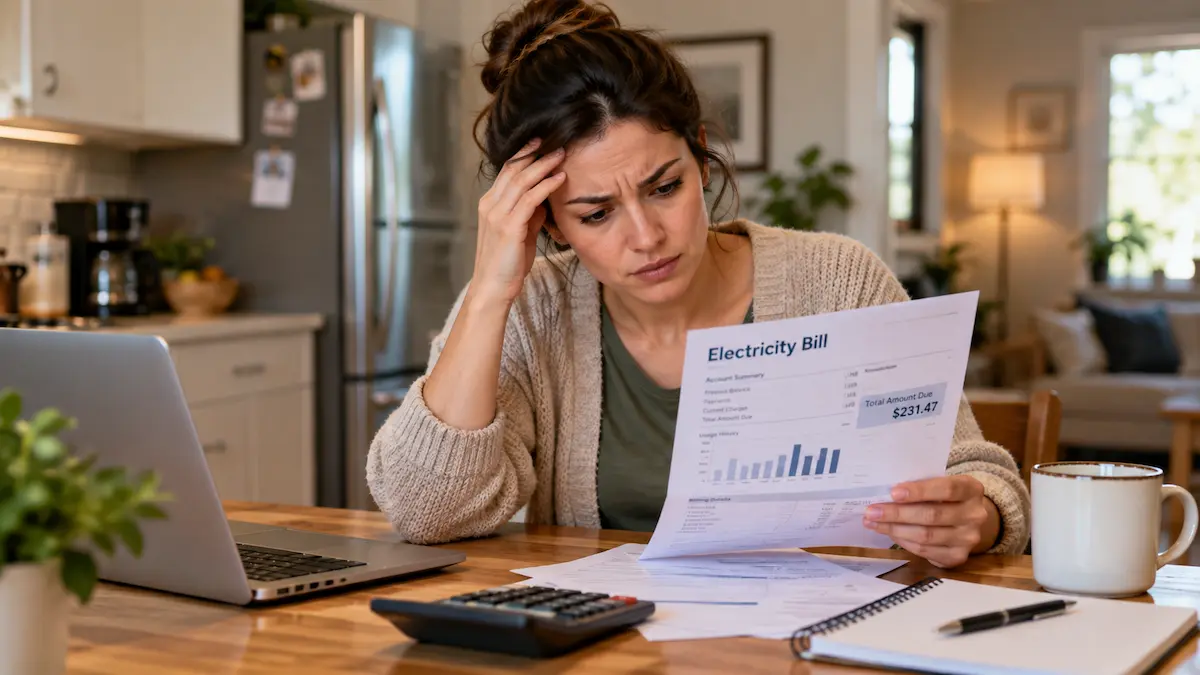
Quick answer
Start by comparing electricity usage in kilowatt-hours (kWh), not just the dollar amount of your bills. If kWh increased, look for changes in heating or cooling, water heating, appliances, occupancy, or other electrical loads. If kWh stayed similar but the bill increased, compare the billing period, electricity rate, fees, credits, and other charges shown on the bill.
First, find out whether your electricity use actually increased
A higher dollar amount does not automatically mean your home used much more electricity. Electric utilities measure electricity use in kilowatt-hours (kWh), so the first useful comparison is the kWh shown on your current bill versus an earlier bill.
Compare the current bill with the previous month and, when possible, with the same month a year earlier. Seasonal weather can make a month-to-month comparison misleading, especially in homes that use electricity for air conditioning or heating.
| What you find | What it suggests |
|---|---|
| kWh increased significantly | Your home probably used more electricity during the billing period. |
| kWh is similar but the dollar amount increased | Look more closely at the electricity rate, fees, credits, and other bill charges. |
| The billing period has more days | Part of the increase may simply come from paying for more days of electricity use. |
| Usage rises during very hot or cold weather | Heating or cooling may be responsible for much of the change. |
Common reasons an electric bill suddenly increases
There is no single normal cause of a high electric bill. Household electricity use varies with climate, the size and type of home, the number and efficiency of electrical devices, how long those devices operate, and the number of people in the household.
| Possible cause | What to look for |
|---|---|
| Hotter weather | The air conditioner runs longer or more frequently than usual. |
| Colder weather | Electric heating or a heat pump operates more often, or supplemental electric heat is being used. |
| HVAC efficiency problem | Longer run times, poor airflow, a dirty filter, unusual cycling, or difficulty maintaining the thermostat setting. |
| Water heating | More hot-water use, longer showers, more occupants, or a possible water-heating problem. |
| New or heavily used equipment | A space heater, dehumidifier, second refrigerator, freezer, pool equipment, EV charging, or another substantial electrical load was added or used more often. |
| More people at home | More cooking, laundry, hot water, electronics, heating, or cooling than usual. |
| Longer billing period | The current bill covers more days than the bill you are comparing it with. |
| Rate or charge change | kWh is similar, but the price per unit or other utility charges differ. |
Check heating and cooling first
Heating and cooling deserve early attention because they are major residential energy uses and are strongly affected by weather. EIA data also show that air conditioning is the largest individual use of residential electricity nationally, although the share for an individual home can be very different.
A change in weather does not have to involve a broken system. A longer stretch of very hot or cold days can increase run time enough to produce a noticeable change in electricity consumption.
- Think about whether the weather was substantially hotter or colder during this billing period.
- Check whether the thermostat setting changed.
- Notice whether the system is running much longer than it normally does.
- Check an accessible HVAC filter and replace or clean it if required by the system and it is dirty.
- Make sure accessible supply and return vents are not unintentionally blocked.
- Pay attention to new noises, weak airflow, short cycling, or trouble reaching the thermostat setting.
Do not overlook electric water heating
Water heating is another major residential electricity use in homes with electric water heaters. A change in hot-water demand can therefore contribute to a higher bill even when nothing appears different in the living areas of the home.
- More people have been staying in the home.
- Showers have become longer or more frequent.
- Laundry or dishwasher use has increased.
- Hot water appears to run out faster than usual.
- A hot-water faucet or fixture is leaking.
- The water heater appears to be operating much more than expected.
Look for appliances and electrical loads that changed
Sometimes the cause is not a failed appliance but a device that is new, seasonal, or simply operating for many more hours. The effect depends on the device's power demand and how long it runs.
- Portable electric space heaters
- A second refrigerator or freezer
- A dehumidifier
- Window or portable air conditioners
- Pool pumps or other pool equipment
- Electric vehicle charging
- Workshop or garage equipment
- More frequent clothes-dryer use
- New computers, gaming equipment, or other electronics used for long periods
Also consider equipment that normally cycles on and off but has begun running almost continuously. A refrigerator, freezer, dehumidifier, pump, or HVAC system that suddenly operates much longer than usual deserves closer attention.
Check the bill itself before assuming something is broken
If your kWh usage did not rise enough to explain the dollar increase, inspect the bill rather than immediately troubleshooting appliances. Utility bill formats and rate structures vary, so use the definitions provided by your own utility when interpreting individual charges.
- Compare the total kWh used.
- Compare the number of days in each billing period.
- Look at the electricity rate or rates shown on the bill.
- Check fixed charges, fees, taxes, credits, or adjustments.
- Look for estimated versus actual meter readings if your utility displays that information.
- If the numbers still do not make sense, contact the utility and ask it to explain the change.
A simple step-by-step way to find the cause
- Compare the current bill's kWh with the previous bill and the same period last year if available.
- Compare the number of billing days.
- Determine whether the increase is mainly in electricity usage or mainly in price and other charges.
- Think about major weather changes during the billing period.
- Check whether heating or cooling ran substantially more than usual.
- Review changes in occupancy, hot-water use, laundry, cooking, and time spent at home.
- List any new or seasonal electrical equipment that was used during the period.
- Look for equipment that has started running unusually long or frequently.
- Contact your utility if the billing figures or meter information still appear inconsistent.
- Arrange professional inspection when symptoms point to an equipment or electrical problem that is outside safe homeowner checks.
When a high bill deserves further investigation
A one-month increase that lines up with unusual weather or a known change in household activity may have a straightforward explanation. An unexplained increase that continues across billing periods is more useful as a signal that something needs to be investigated.
Pay particular attention when the increase is accompanied by equipment that runs continuously, repeated breaker trips, unusually hot electrical components, burning odors, visible electrical damage, abnormal HVAC behavior, or another new symptom.
What to do next
The most useful next step depends on what your bill comparison shows. If kWh rose sharply, focus on what changed inside the home or in the weather. If kWh remained similar, focus on rates, billing days, fees, and utility adjustments. If usage remains unexpectedly high for multiple billing periods and there is no clear lifestyle or weather explanation, begin narrowing the problem by major electrical load rather than guessing at small devices.
Frequently asked questions
FAQ
Why did my electric bill go up even though nothing changed?
Some important changes are easy to miss. Weather can make heating or cooling run longer, the billing period may contain more days, electricity rates or other charges may change, or equipment may be operating longer than it normally does. Compare kWh, billing days, and bill charges before assuming an appliance is faulty.
Can air conditioning cause a sudden high electric bill?
Yes. Air conditioning is a major residential electricity use, and hotter weather can substantially increase cooling run time. A dirty filter, dirty coils, airflow problems, or other HVAC issues can also reduce efficiency or make the system operate longer.
Why is my bill higher if my kWh is about the same?
If electricity usage is similar, examine the number of billing days, electricity rate, fixed charges, fees, taxes, credits, and adjustments. Rate structures vary by utility, so use your utility's bill explanation or contact the utility when a charge is unclear.
Should I unplug everything to find what is causing a high bill?
Usually not as a first step. Start with the bill itself and the largest likely changes, such as heating and cooling, water heating, new high-use equipment, occupancy, and seasonal loads. This is generally more useful than randomly unplugging small devices.
When should I call an electrician about a high electric bill?
A high bill alone does not necessarily indicate an electrical fault. Professional help becomes more important when high usage is unexplained and you also notice symptoms such as repeated breaker trips, burning odors, sparking, damaged wiring, unusually hot electrical equipment, or other signs of an electrical problem.
Research
Sources
- Electricity Use in Homes— U.S. Energy Information Administration
- Energy Use in Homes— U.S. Energy Information Administration
- Measuring Electricity— U.S. Energy Information Administration
- Heating and Cooling Maintenance Checklist— ENERGY STAR
- Heat & Cool Efficiently— ENERGY STAR