Appliances
Refrigerator Door Not Sealing? How to Check the Gasket and Fix Common Causes
Learn why a refrigerator door may not close tightly, how to check the gasket safely, and when a repair or replacement is needed.
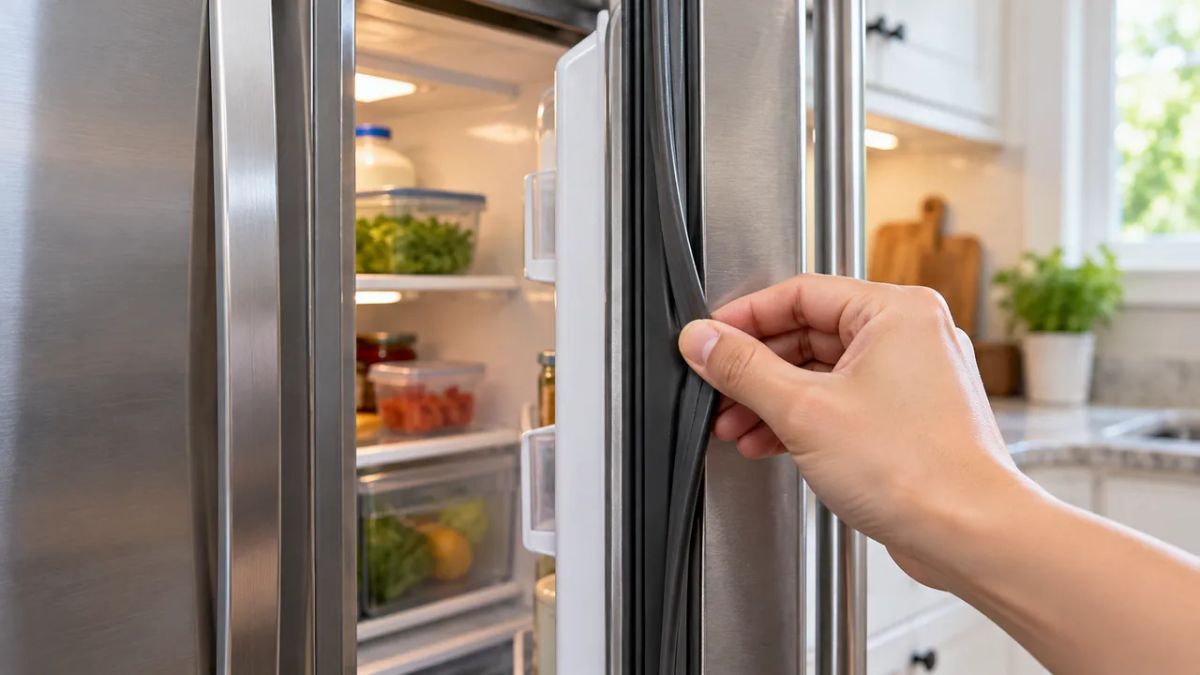
Quick answer
If your refrigerator door is not sealing, first remove anything blocking it, inspect and clean the gasket using the manufacturer’s instructions, and check for gaps around the door. A paper test can reveal weak contact, but it does not prove the gasket is defective. Check food temperature and arrange service if the door still will not close.
Introduction
A refrigerator door that will not seal can let warm air into the cabinet, make the appliance work harder, and put food at risk if the interior gets too warm. Before buying a replacement gasket, check for an obstruction, dirt along the seal, a twisted or torn gasket, and a door that is out of alignment.
First, Check Food Temperature
Place an appliance thermometer in the refrigerator and check the temperature rather than judging by how cold the air feels. FoodSafety.gov recommends keeping the refrigerator at 40°F (4°C) or below and the freezer at 0°F (-18°C) or below. If the appliance is not maintaining safe temperatures, prioritize protecting perishable food while arranging repair.
Why a Refrigerator Door May Not Seal
| What you notice | Possible explanation | Safe first check |
|---|---|---|
| Door stops before closing | A shelf, drawer, container, or door bin is in the way | Move protruding items and close the door gently |
| Sticky or uneven contact along the edge | Spills or debris on the gasket or cabinet face | Clean using the manufacturer-approved method |
| Visible split, hardened section, or missing contact | Damaged or deformed door gasket | Check the model-specific replacement guidance |
| One corner stays open | Door alignment, hinge, or leveling issue | Check the owner’s manual; do not force hinges |
| Moisture inside and frequent door alarm | Door left ajar or poor closure | Inspect for obstructions and confirm a full seal |
A Safe Step-by-Step Door-Seal Check
- Move food packages and bins away from the door opening. Check that drawers are fully pushed in and that nothing protrudes past the shelf edges.
- Look around the entire gasket for food residue, folds, gaps, tears, or sections that have pulled away. Inspect the cabinet contact surface too.
- Clean the gasket according to your refrigerator’s manual. For some GE models, mild soap and warm water are recommended; cleaning instructions vary by model. Wipe it dry. Avoid harsh solvents, bleach, and abrasive tools unless the manufacturer specifically permits them.
- Close the door slowly and look for a uniform fit around the perimeter. Repeat on each refrigerator and freezer door, including the opposite door on multi-door models.
- Try a paper test: close the door over a narrow strip of paper, then gently pull it. Compare the resistance at several points. Little resistance in one area may suggest a sealing problem, but the test alone does not diagnose the cause.
- Check the appliance thermometer again after the refrigerator has had time to stabilize. If it remains too warm, or the door still fails to close, consult the model-specific manual or arrange qualified service.
How to Interpret the Paper Test
The U.S. Department of Energy describes closing the refrigerator door over a piece of paper or a dollar bill and checking whether it pulls out easily. Compare several locations instead of assuming a single loose spot proves the gasket must be replaced. Door alignment and closure problems can produce similar symptoms.
When Cleaning Is Enough—and When It Is Not
- Cleaning may help when crumbs, sticky spills, or residue prevent the gasket from meeting the cabinet evenly.
- A visible tear, missing section, or persistent gap after cleaning may require a model-compatible replacement gasket. ENERGY STAR advises replacing seals that are no longer airtight.
- If the door sags, rubs, or does not sit squarely, the issue may involve alignment or leveling rather than the rubber seal. Use the owner’s manual or a qualified technician.
- If cooling remains poor despite a well-sealed door, the problem may be elsewhere in the refrigerator; do not assume the gasket is the only cause.
What Not to Do
- Do not use a heat gun, open flame, or unapproved heating method to reshape a gasket.
- Do not pry apart hinges or remove heavy doors without model-specific instructions and appropriate assistance.
- Do not bypass door switches or open electrical panels to investigate a closure issue.
- Do not apply lubricants or chemicals based on generic online tips; gasket materials and manufacturer instructions differ.
Why the Seal Matters for Energy Use
A poor door seal can allow air leakage and undermine efficient operation. ENERGY STAR specifically recommends keeping refrigerator door seals airtight. If you want to investigate your household’s broader appliance electricity use, see How to Find What’s Using the Most Electricity in Your Home. That guide addresses electricity usage, not gasket diagnosis.
When to Call for Service
- The door will not stay closed after obstructions have been removed.
- The gasket is torn or no longer contacts the cabinet in multiple places.
- The door is visibly misaligned, damaged, or difficult to support safely.
- The refrigerator cannot consistently hold 40°F (4°C) or below, or food has repeatedly become warm.
- You are unsure which replacement part or adjustment procedure applies to your model.
Frequently Asked Questions
Can I fix a refrigerator gasket without replacing it?
Sometimes. If residue or a misplaced container is preventing closure, cleaning or removing the obstruction may restore the seal. Tears, severe deformation, or persistent gaps may require a replacement part or professional adjustment.
Does the paper test prove my gasket is bad?
No. It is a screening check, not a definitive diagnosis. Compare multiple locations and inspect for obstructions, door alignment, and visible damage before deciding to replace a part.
Why is there condensation inside my refrigerator?
Warm, humid air entering through a door that is opened often or left ajar can contribute to condensation. GE Appliances recommends checking door closure, gasket condition, alignment, and leveling when investigating interior moisture.
Can a bad seal make my electric bill higher?
A leaking seal can reduce efficiency, but it is not possible to assign a specific bill increase without measurements. If your bill changed unexpectedly, compare usage and billing details separately.