HVAC
AC Running but Not Cooling? Safe Checks Before Calling a Technician
Find out why an air conditioner may run without cooling your home, which safe checks to try, and when to call an HVAC technician.
Quick answer
Check that the thermostat is set to Cool, inspect the accessible air filter, and make sure vents are unobstructed. If cooling is still weak—or you notice ice, water leaks, or unusual noises—stop troubleshooting and contact a qualified HVAC technician.
Introduction
If your air conditioner is running but the house is not getting cooler, start with the thermostat settings, air filter, and unobstructed vents. These checks may reveal a simple airflow or control issue. If cooling remains weak, an HVAC professional may need to evaluate the coils, refrigerant system, or electrical components.
First, identify what “running but not cooling” means
A fan blowing air is not proof that the cooling equipment is working. Notice whether the supply vents deliver air, whether that air feels cooler than the room, and whether the thermostat temperature is moving toward its setting. Avoid treating any one symptom as a definitive diagnosis.
| What you notice | Possible explanation | Safe next step |
|---|---|---|
| Airflow is weak at several vents | Dirty filter or restricted airflow | Check the accessible filter and visible vent obstructions |
| Airflow feels normal but the room stays warm | Thermostat setting, cooling-system issue, or high heat load | Confirm cooling mode and contact a technician if the issue persists |
| Outdoor unit seems inactive | Control, power, or equipment issue | Check thermostat settings; do not open electrical panels |
| Ice is visible on accessible refrigerant lines or equipment | Possible airflow or refrigerant problem | Stop cooling and arrange professional service |
| Water is leaking around indoor equipment | Possible condensate drainage problem | Keep clear of wet electrical equipment and arrange service |
Six safe checks to try before calling for service
1. Confirm the thermostat is actually calling for cooling
Set the thermostat to Cool and choose a temperature below the current room temperature. If the thermostat has separate fan settings, Auto generally makes the fan operate with the cooling cycle rather than continuously. Check the displayed room temperature and any schedule or hold settings. If the display is blank, consult the thermostat manual before replacing batteries; some thermostats are hardwired.
2. Check the air filter
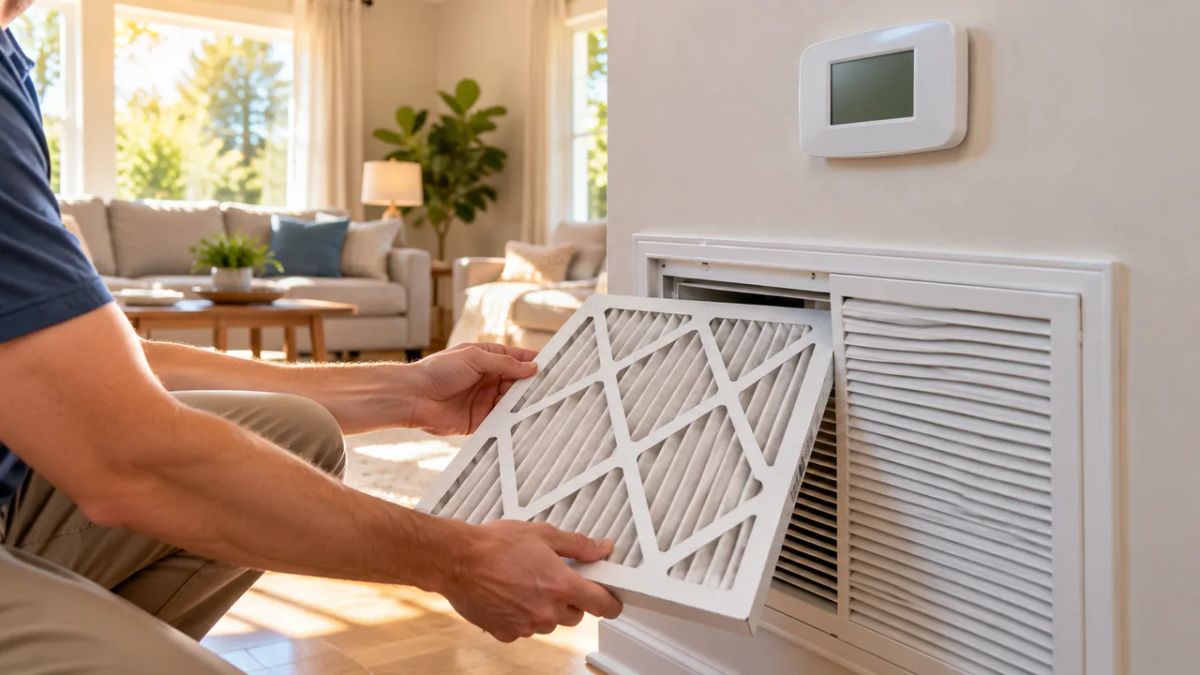
A clogged filter can restrict airflow and reduce cooling performance. If the filter is in an accessible, homeowner-serviceable location, turn the system off, follow its instructions, and inspect it. Replace a disposable filter with the specified size and airflow orientation, or clean a reusable filter as directed. Do not operate the system without the required filter.
ENERGY STAR advises checking central HVAC filters monthly, particularly during heavy use, and changing or cleaning them when dirty. Filter replacement frequency depends on the system, filter type, and conditions in the home.
3. Look for blocked supply and return vents
Move furniture, rugs, or stored items away from accessible supply registers and return grilles. Avoid closing many vents in an attempt to redirect cooling; doing so can affect airflow in some ducted systems. Never reach into a running fan or open equipment housings.
4. Observe the outdoor unit from a safe distance
For a central split system, check whether leaves, boxes, or plants are crowding the outdoor unit. Keep the surrounding area clear without reaching through the grille, touching electrical connections, or opening covers. A unit that is silent, repeatedly starts and stops, or makes unusual noises may require professional diagnosis.
5. Consider whether heat gain is overwhelming the system
Strong afternoon sun, open windows, unusually hot weather, or a recent increase in indoor heat sources can make a home harder to cool. Close open windows while cooling, use window shades where practical, and compare room conditions over time. These steps do not repair a malfunctioning air conditioner.
6. Note any water leaks, ice, or unusual odors
Water near the indoor unit can indicate a condensate drainage problem. Visible ice can accompany restricted airflow or other equipment faults. Burning smells, smoke, or sparking require immediate attention: turn the system off if safe and seek emergency assistance when warranted.
What commonly causes poor cooling?
- Dirty or improperly fitted air filter: reduced airflow can interfere with cooling and increase equipment strain.
- Thermostat configuration or sensor issues: the system may not be receiving the intended cooling request.
- Dirty indoor or outdoor coils: accumulated dirt can reduce heat transfer and increase run time.
- Refrigerant leaks or incorrect charge: these require professional diagnosis and service.
- Duct leakage or restrictions: conditioned air may not reach the rooms effectively.
- Condensate drainage or control problems: these can interfere with normal operation on some systems.
The U.S. Department of Energy identifies dirty filters, thermostat problems, drainage issues, and refrigerant problems among common air-conditioning faults. ENERGY STAR recommends professional maintenance that includes coil cleaning, electrical checks, and inspection of the condensate drain.
When should you call an HVAC technician?
- Call promptly if cooling does not improve after the accessible thermostat, filter, and vent checks.
- Stop the cooling system and request service if you notice ice, repeated shutdowns, significant water leakage, or unusual mechanical noises.
- If there is smoke, sparking, or a strong burning smell, stop using the equipment and follow appropriate emergency precautions.
- Tell the technician what you observed: thermostat setting, indoor temperature trend, airflow changes, noises, water, or ice. This can help narrow the inspection without guessing at the repair.
How to reduce the chance of the problem returning
- Check the air filter regularly and follow the equipment manufacturer’s replacement instructions.
- Keep accessible registers and outdoor-unit surroundings clear.
- Arrange a professional cooling-system check before the season of heavy use.
- Ask the technician to evaluate coil condition, airflow, controls, refrigerant charge, and condensate drainage as appropriate.
If you want to estimate what a normally operating air conditioner may cost to run, use the Nestlyra AC Running Cost Calculator. A cost estimate cannot diagnose a cooling fault.
Frequently asked questions
Why is my AC blowing air but not cold air?
The indoor fan can run even when cooling is not operating normally. Check that the thermostat is set to Cool and inspect the accessible filter. If airflow continues without effective cooling, professional diagnosis may be needed.
Can a dirty filter make the AC stop cooling?
Yes. A dirty filter can restrict airflow and reduce cooling effectiveness. Replace or clean it according to the equipment instructions. If cooling does not recover, do not assume the filter was the only problem.
Should I keep lowering the thermostat to make the room cool faster?
No. Setting a lower target temperature generally does not make a conventional air conditioner cool the home faster. Use a comfortable setting and address the underlying cooling issue.
Can I add refrigerant myself?
No. A suspected refrigerant leak or incorrect charge requires qualified service. Adding refrigerant without diagnosing the problem can be unsafe and may damage the equipment.