Plumbing
Water Under the Kitchen Sink? How to Find the Source Safely
Find out why water is collecting under your kitchen sink, how to narrow down the source safely, and when to call a plumber.
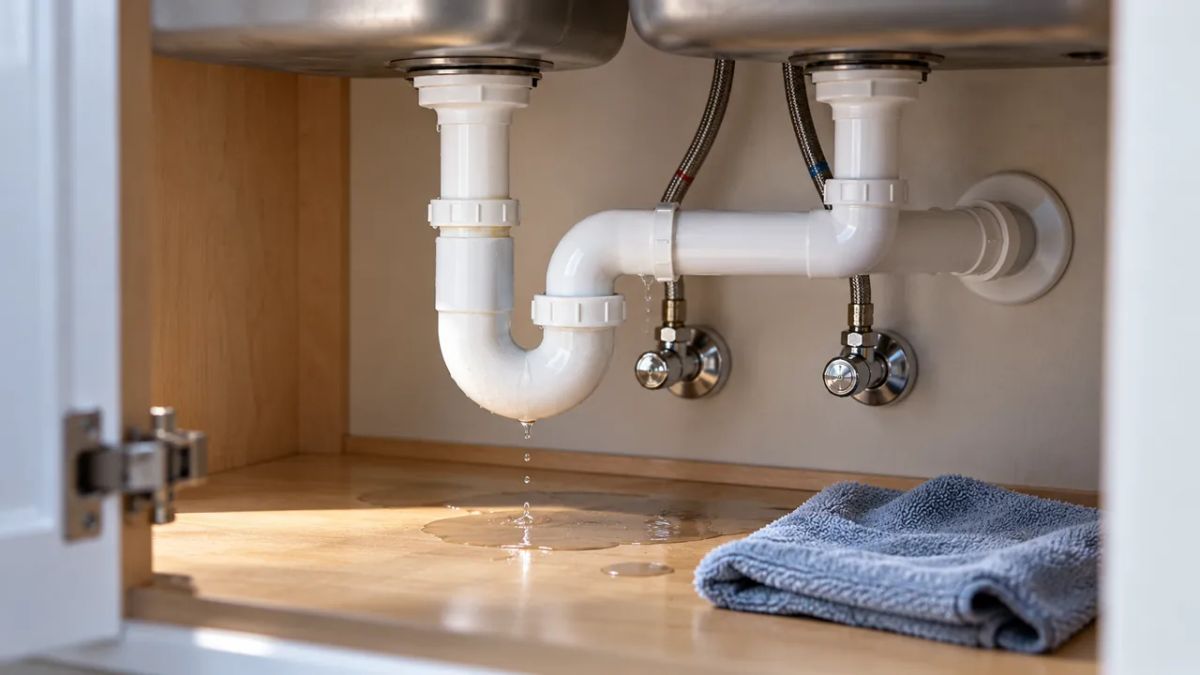
Quick answer
Stop using the sink and nearby appliances, check for electrical hazards, and look for visible dripping from supply lines, drains, the faucet, or appliance hoses. Shut off the affected water supply if it is safe to do so, dry the cabinet promptly, and call a professional if the leak continues or the source is unclear.
First, identify where the water is coming from
Water under a kitchen sink can come from the faucet supply lines, shutoff valves, drain connections, garbage disposal, dishwasher hose, or water running down from the countertop. A wet cabinet floor alone does not identify the source. Start by stopping water use and looking for active dripping without touching electrical equipment.
What to do right away
- Stop using the kitchen faucet, dishwasher, and garbage disposal until you understand the leak.
- Move dry items out of the cabinet. Keep hands and electrical cords away from standing water.
- Place a bucket or absorbent towels under a drip only if the area is electrically safe.
- Look for a clearly labeled, accessible shutoff valve for the affected fixture. Turn it clockwise gently if it operates normally; do not force a stuck or corroded valve.
- If the leak continues after the fixture is shut off, or you cannot isolate it safely, close the accessible main water shutoff and call a plumber.
- Photograph the location and pattern of water before cleanup, then dry the area promptly.
Match the leak to when it happens
| When you notice water | Possible source to inspect visually | What it means |
|---|---|---|
| Even when nothing is running | Supply hose, shutoff valve, or pressurized connection | Treat as potentially continuous; shut off water and arrange repair |
| Only while the faucet runs | Faucet base, sprayer hose, sink rim, or drain connection | Observe from a dry, safe position without disassembling parts |
| Only when the sink drains | Trap, slip-joint, or drainpipe connection | Stop draining water through that sink |
| After the dishwasher runs | Dishwasher drain or supply connection | Stop dishwasher use and seek appliance/plumbing service |
| Around the garbage disposal | Disposal body, sink flange, or drain connection | Do not operate or open the disposal; arrange service |
These are diagnostic clues, not a definitive diagnosis. Water can travel along pipes or cabinet surfaces before appearing elsewhere.
How to check without taking plumbing apart
- Dry the cabinet floor and visible exterior of the pipes after the leak is controlled.
- Use a flashlight to inspect visible joints, hoses, and the underside of the sink. Do not move wiring or electrical devices.
- If the area is completely dry and electrically safe, have another person briefly run the faucet while you watch from outside the cabinet. Stop immediately if dripping appears.
- If no leak appears during faucet use, do not repeatedly run the dishwasher or disposal to provoke one. Note when the leak previously occurred and share that information with a technician.
Common causes and what to do
Supply line or shutoff valve leak
Water appearing while the faucet is off may indicate a pressurized supply connection. Shut off the fixture supply if the valve is safe to operate. A corroded valve, swollen hose, or continuing leak needs professional repair; do not tighten unfamiliar fittings under pressure.
Drain trap or pipe connection
Water appearing only as the sink empties points toward the drain assembly. Stop using the sink and have the drain connection inspected. Avoid chemical drain cleaners, which can add hazards when a leaking drain must be serviced.
Faucet, sprayer, or sink edge
A loose faucet component or water escaping around the sink edge can wet the cabinet even when pipes look intact. Look for water tracking down the faucet shank or cabinet wall. Repair the source rather than merely sealing the visible wet spot.
Dishwasher or garbage disposal
These appliances combine water and electrical components. Stop using the affected appliance and seek qualified service. Never put a hand inside a disposal or remove an electrical cover to investigate a leak.
Prevent cabinet damage and mold
Once the leak has been stopped, remove standing water and dry the cabinet, wall, and stored items. The U.S. Environmental Protection Agency advises drying wet materials within 24–48 hours to help prevent mold growth. If porous cabinet panels remain swollen, damp, or moldy, a water-damage professional may be needed.
The EPA’s guidance on mold and moisture emphasizes correcting the moisture source, not just cleaning the visible surface.
When to call a plumber or other professional
- The leak continues with the faucet turned off, or a shutoff valve does not work.
- Water is reaching electrical connections or an appliance.
- You see corrosion, damaged supply tubing, a cracked fitting, or a swollen cabinet base.
- Water is entering walls, floors, or adjacent rooms.
- The source is unclear or the leak returns after drying.
A licensed plumber can inspect supply and drain connections; an appliance technician may be appropriate for a dishwasher or disposal. If electrical equipment was wetted, consult a qualified electrician before restoring its use.
Frequently asked questions
Why is there water under my sink when I have not used it?
A supply-side connection can leak while the faucet is off because the water line remains pressurized. Stop the leak with an accessible shutoff if safe, and have the connection inspected.
Can I keep using the sink if the leak is small?
It is safer to stop using the affected fixture until the source is identified. Even a small recurring leak can damage cabinet materials and conceal a larger problem.
Does water under the sink always mean a pipe is leaking?
No. Water may come from the faucet base, countertop edge, sprayer hose, dishwasher connection, or condensation on cold plumbing. Timing and the path of the water help narrow the possibilities.