General Home Problems
Why Is There Condensation on the Inside of My Windows?
Learn why moisture collects on the inside of windows, how to reduce condensation safely, and when damp frames or trapped moisture need professional attention.
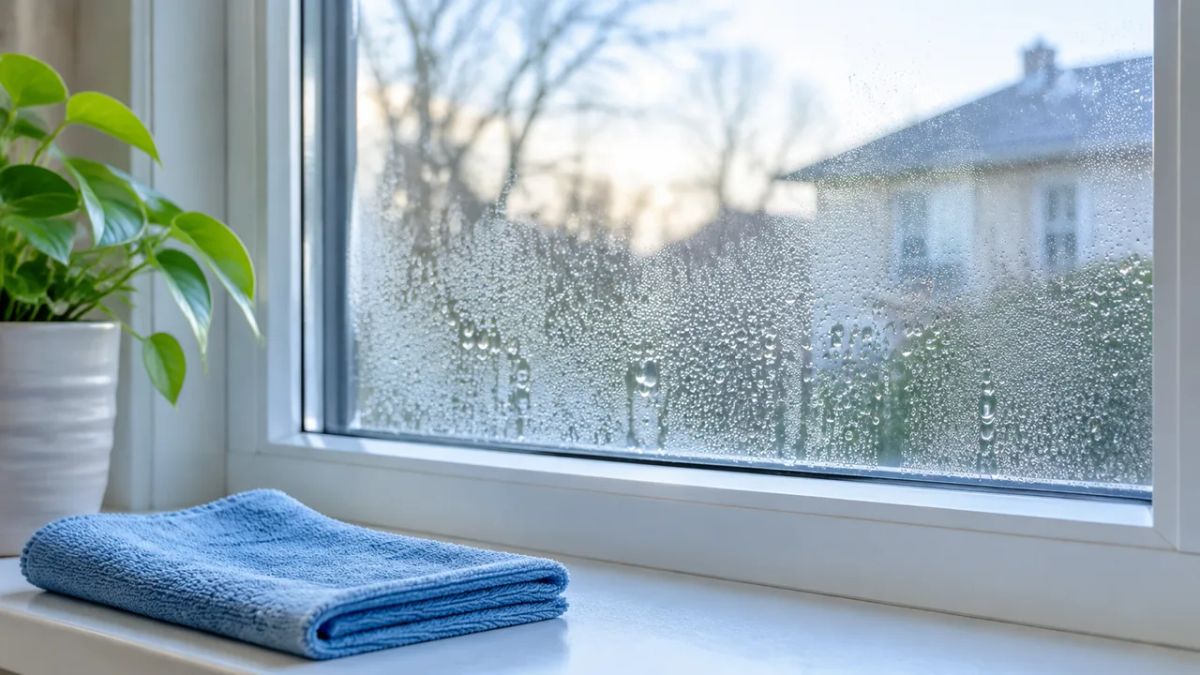
Quick answer
Condensation on the room-facing side of a window usually happens when humid indoor air touches cold glass. Wipe up water, check indoor humidity, improve ventilation, and investigate recurring dampness or moisture trapped between panes.
Introduction
Finding water droplets on the room-facing side of a window usually means humid indoor air is touching glass that is cool enough for moisture to condense. It does not automatically mean the window is leaking or defective. First identify exactly where the moisture is, then reduce excess indoor humidity and look for recurring wet surfaces.
First, identify where the moisture is
| Where you see moisture | What it may mean | Useful next step |
|---|---|---|
| On the room-facing glass | Indoor moisture is condensing on a cooler surface | Dry the sill and check humidity and ventilation |
| On the outdoor-facing glass | Outdoor air conditions can cause exterior condensation | Observe whether it clears as conditions change |
| Trapped between panes of insulated glass | A failed insulating-glass seal is possible | Ask a window professional to assess the glazing |
| Around the frame, trim, or wall | Condensation, rain intrusion, or a separate leak may be involved | Check when it appears and seek help if materials stay wet |
A simple observation helps: wipe a small accessible area on the room side. If the droplets disappear from that surface, they were on the interior glass. Do not climb, lean out of windows, or dismantle glazing to investigate.
Why condensation forms indoors
Warm air can hold more water vapor than cooler air. When humid room air contacts sufficiently cold glass, some of that vapor changes to liquid water. Cooking, showers, drying laundry indoors, and other moisture-producing activities can increase indoor humidity. Cold weather and poorly ventilated spaces often make the problem more noticeable.
Condensation can occur even with a functioning window. However, persistent water on the sill, staining, peeling paint, or damp trim should not be dismissed, because repeated moisture can damage materials and support mold growth.
What to do today
- Wipe visible water from the glass and sill. Dry nearby trim and check for damp curtains or blinds.
- Measure indoor relative humidity with a hygrometer rather than guessing from how the room feels.
- Run bathroom exhaust fans during showers and use a range hood that vents outdoors when cooking, if available.
- Check that clothes dryers exhaust outdoors and that existing vents are unobstructed; do not modify ducting or electrical equipment yourself.
- Use an appropriately sized dehumidifier when needed, following its instructions and keeping its reservoir and filter clean.
- Keep furniture and heavy window coverings from unnecessarily blocking airflow around affected glass, while maintaining safe clearances for heaters.
- Recheck the same window over several days, noting outdoor temperature, indoor humidity, and whether the sill stays dry.
The U.S. Environmental Protection Agency recommends keeping indoor relative humidity below 60%, ideally around 30% to 50% where feasible. A suitable target depends on the climate and the temperature of the glass; if condensation persists, a lower indoor humidity level may be needed without making the home uncomfortably dry. See the EPA guide to mold and moisture.
When condensation signals a larger problem
- Water repeatedly pools on wood trim or drywall, or the paint begins to bubble or peel.
- You notice musty odors, visible mold, or moisture that returns despite reasonable humidity control.
- Moisture appears after rain, runs from the wall or frame, or cannot be wiped from either accessible glass surface.
- Multiple rooms have persistent dampness, suggesting a ventilation, insulation, or moisture-source problem.
For significant or recurring dampness, a qualified window, building-envelope, or moisture-remediation professional can help distinguish condensation from rain leakage, glazing failure, or hidden damage. The EPA advises drying wet materials promptly, generally within 24–48 hours, to help prevent mold growth; this is a prevention goal, not a guarantee. See EPA mold guidance.
How to prevent it from returning
Focus on moisture control before assuming the window must be replaced. Repair plumbing or exterior leaks, use exhaust ventilation where appropriate, keep humidity in a suitable range, and monitor trouble spots after cold nights. If condensation occurs between panes, ask a professional about glazing repair or replacement rather than treating it as an indoor-humidity problem.
Frequently asked questions
Does condensation inside a window mean the seal is broken?
Not if the water is on the room-facing surface. A failed seal is more likely when moisture is trapped between the panes of an insulated-glass unit, where it cannot be wiped away from either exposed surface.
Should I leave a window open in winter?
Ventilation may help when outdoor air is drier, but leaving a window open is not always practical or safe. Use installed exhaust ventilation and humidity monitoring first, and consider local weather, security, and heating needs.
Will replacing the window fix the condensation?
Not necessarily. Better-performing windows can make the inside glass warmer in cold conditions, but excess indoor moisture may still condense on cold surfaces elsewhere. Identify the location and source of moisture before committing to replacement.